In short
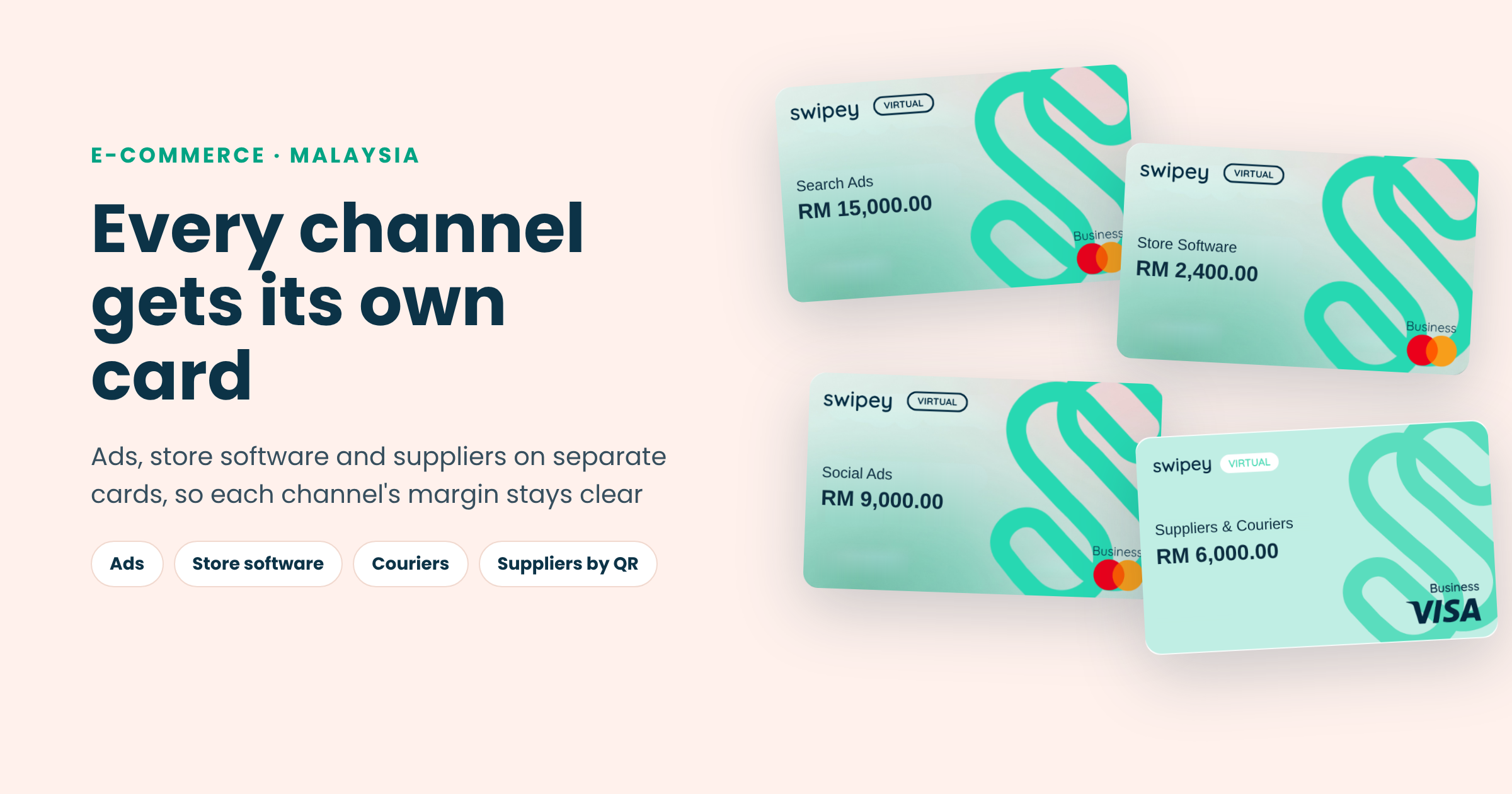
E-commerce businesses in Malaysia keep spend under control by giving each ad platform, tool and supplier its own card with a limit. Ad spend stays separate by channel for margin tracking, one failed payment can't pause every campaign, and every transaction lands in your books with its receipt.
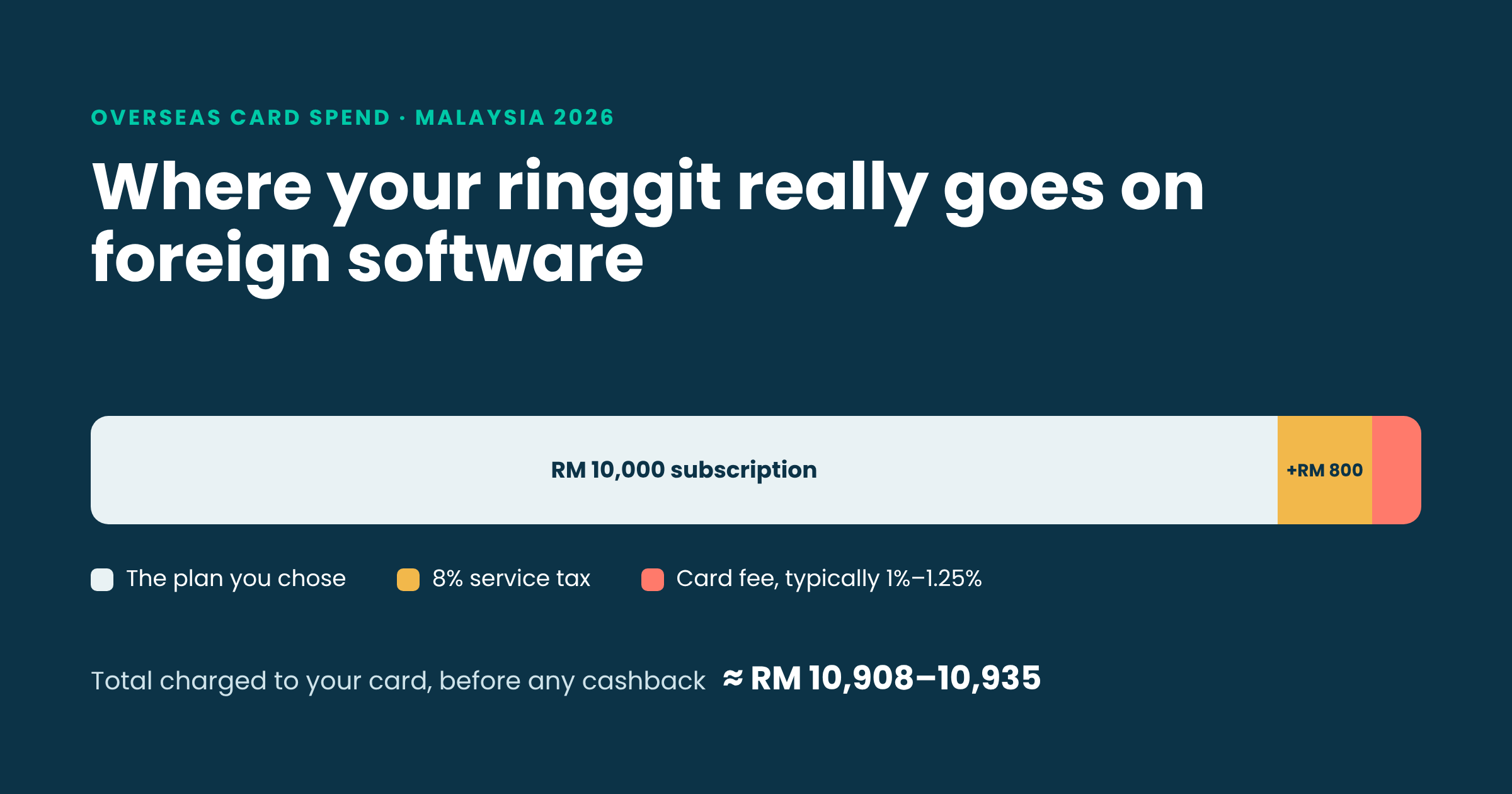
Online brands spend money in more places than almost any other business: search and social ads, the store platform, email and review apps, couriers, packaging, and the supplier who only takes QR. Put it all on one card and you lose the one number that matters most, which is how much each channel really costs.
The e-commerce spend problem
- Blurred margins. When ads, apps and suppliers share one statement, working out the true cost per channel means a spreadsheet every month
- Paused campaigns. One card hits its limit during a sale and every ad account on it stops at once
- Personal cards everywhere. Founders and ops staff pay for tools and couriers themselves, then claim it back weeks later
- OTP bottlenecks. Every payment needs the one person with the card's phone
One card per channel: a typical setup
| Channel or tool |
Card |
Control to set |
| Search ads (Google Ads) |
Corporate Card |
Monthly budget plus tax, raised before big sale days |
| Social and marketplace ads |
A Corporate Card per platform |
Separate limits, so each channel's return is clear |
| Store platform and apps |
A Corporate Card per tool |
Limit just above each subscription |
| Local suppliers, couriers, packaging |
Virtual Card - QR Enabled |
A weekly budget per ops staff member |
| Supplier invoices |
Bill payments |
Approved, scheduled and paid in batches |
Paying for ads across platforms
Ads are usually an online store's biggest cost, and the one that hurts most when a payment fails mid-sale. Give each ad account its own card, set the limit on budget plus service tax, and raise it before campaigns like 11.11 or Raya, not during them.
The Swipey Corporate Card keeps Google Ads running without declines. For platform-by-platform billing advice, see how to pay for Meta ads from Malaysia and how to fix a declined card on Google Ads.
Your software stack and your suppliers
Store platform, email, reviews, inventory and design tools: give each subscription its own card so a price rise is obvious and a cancelled tool can't keep charging. Here's how to set up SaaS on a corporate card.
Offline, the Virtual Card - QR Enabled lets ops staff pay couriers, packaging suppliers and market stalls by DuitNow QR from a budget you set, with no cash and no claims. Larger supplier invoices go through bill payments, paid in batches by DuitNow, GIRO or JomPAY.
Cash flow and cashback
Separate cards give you a live view of spend per channel, so you can pull budget from what isn't working before the month ends. And your software stack earns something back: eligible software, digital subscription and online business services spend on the Corporate Card earns 1.1% cashback, with no monthly cap per company.
Campaign runs 1 October 2026 to 30 June 2027. See the cashback terms for what counts.
"Having transactions all in one place takes away the need to juggle multiple cards and deal with OTPs"
FAQ
How should e-commerce businesses pay for ads?
On a company card, with one card per ad account. Set each limit on budget plus service tax, and raise it before big sale days so payments don't fail mid-campaign.
How do I track ad spend per channel?
Give each channel its own card. Its spend is then that channel's ad cost, without splitting a shared statement by hand.
Can my ops team pay couriers and suppliers without cash?
Yes. Swipey's Virtual Card - QR Enabled pays any DuitNow QR merchant from a budget you set, and every payment is tracked live.
Give every channel its own card
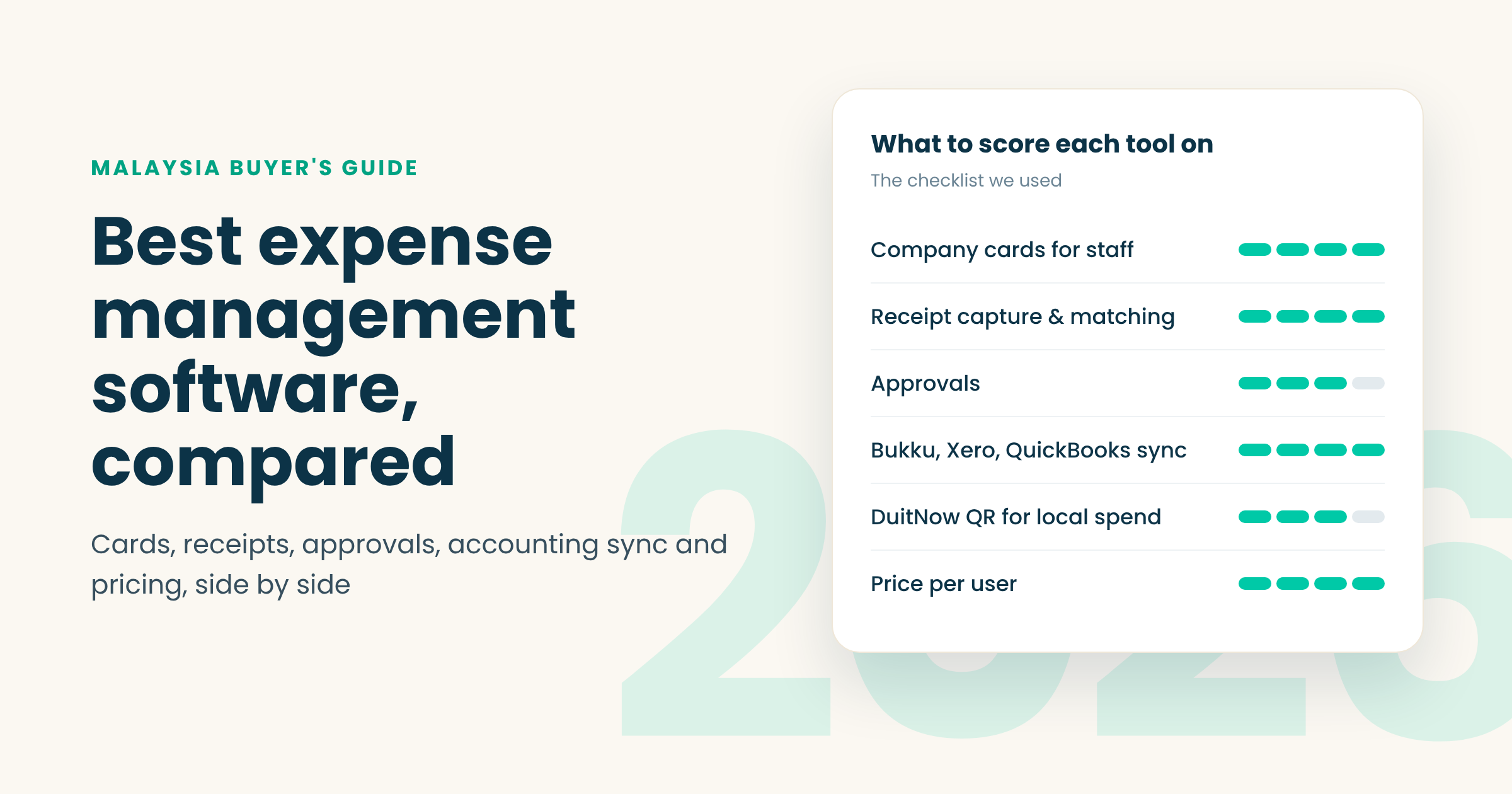
Cards for ads, tools and suppliers, one dashboard for the whole store, synced to Bukku, Xero or QuickBooks. Trusted by 4,000+ Malaysian businesses.