In short
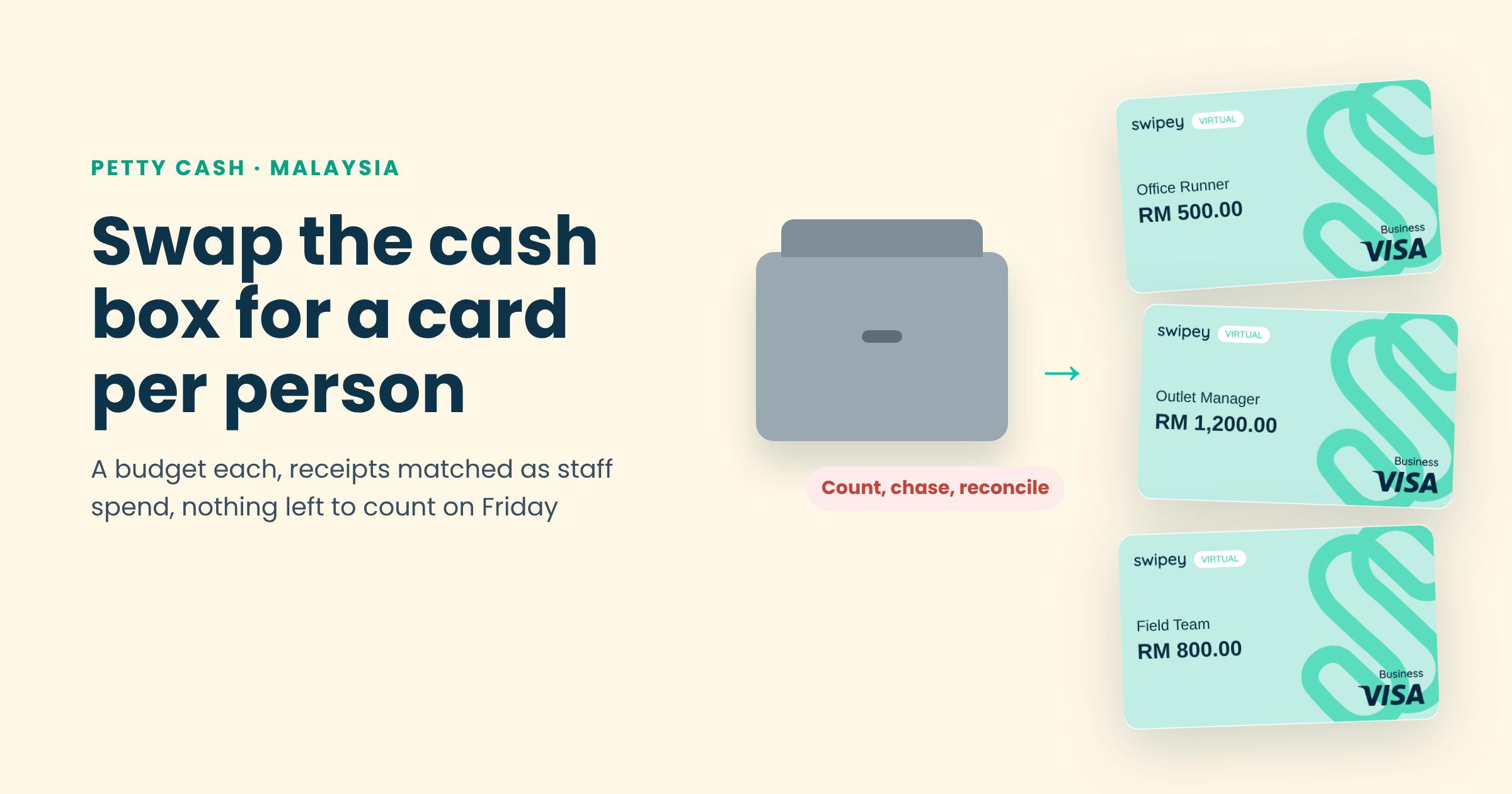
Petty cash is a small cash float for minor business expenses. To manage it, set a fixed float, name one custodian, require a voucher and receipt for every payout, and reconcile weekly. Many Malaysian companies now replace the cash box with digital petty cash: a card per staff member, each with its own budget, that pays by DuitNow QR and captures receipts as staff spend.
What is petty cash?
Petty cash is money kept on hand for small, everyday business costs that aren't worth a purchase order: parking, courier fees, office snacks, a quick hardware run. It's usually a fixed amount in a locked box, looked after by one person and topped up when it runs low.
How to set up a petty cash process
1
Set the float
Pick a fixed amount that covers about a month of small expenses. Keep it as low as you can.
2
Name one custodian
One person holds the box and signs off payouts, with a named backup for leave.
3
Use a voucher for every payout
No voucher and receipt, no cash. The template below covers what each voucher needs.
4
Reconcile weekly
Cash in the box plus vouchers paid out should always equal the float. Investigate any gap straight away.
5
Top up and record
Top up by the amount of the vouchers, and record each expense in your books under the right category.
Petty cash policy and voucher template
Copy this into your own policy and adjust the amounts in brackets.
Petty cash policy
- Float: the petty cash float is RM[amount], held by [custodian], with [backup] as backup.
- Allowed: parking, tolls, couriers, office supplies, staff refreshments and minor repairs under RM[limit] per item.
- Not allowed: salaries or advances, personal loans, gifts, and anything over RM[limit], which goes through normal purchasing.
- Evidence: every payout needs a signed voucher and an original receipt within [3] working days.
- Reconciliation: the custodian reconciles every [Friday], and finance checks it monthly.
- Shortfalls: any unexplained gap is reported to [finance lead] the same day.
| Petty cash voucher: fields to include |
| Voucher no. and date |
Numbered in sequence, so gaps show |
| Paid to |
Staff member or merchant |
| Purpose and category |
e.g. "Courier to client, Postage" |
| Amount (RM) |
Matches the receipt exactly |
| Receipt attached |
Yes / no, with a reason if no |
| Signatures |
Recipient and custodian |
Common petty cash problems
- The box never balances. A missing voucher or a miscounted top-up and the week's reconciliation turns into an investigation
- Receipts go missing. Faded thermal paper, crumpled slips and "I'll bring it tomorrow"
- Cash leaves the office. Field staff and outlets need their own floats, and each one is a risk
- The custodian becomes a bottleneck. Every RM20 purchase waits for one person to unlock the box
Cash is also where expense fraud is easiest. See the 5 types of expense fraud and how to prevent them.
Digital petty cash: a card instead of a cash box
Digital petty cash gives each person who needs small change their own card with its own budget. On Swipey, that's the Virtual Card - QR Enabled: staff scan any DuitNow QR merchant to pay, and you see every payment as it happens.
The Virtual Card - QR Enabled pays up to RM10,000 per transaction and up to RM50,000 a day by DuitNow QR, which comfortably covers petty cash spend.
| |
Cash box |
Digital petty cash |
| Budget |
One float for everyone |
A limit per person, outlet or team |
| Paying |
Cash, collected from the custodian |
Scan any DuitNow QR, wherever staff are |
| Receipts |
Paper, chased at the end of the week |
Snapped in the app and matched by Alfie |
| Reconciliation |
Count the box, match the vouchers |
Every payment already recorded and synced to your books |
| Risk |
Lost or stolen cash is gone |
Freeze the card and claw back the balance |
For how limits, freeze and clawback work, see our guide to corporate card controls.
FAQ
How much petty cash should a company keep?
Enough for about a month of small expenses, and no more. A smaller float means less to lose and less to reconcile. Track a few months of spend, then set the float just above the typical monthly total.
How do you record petty cash?
Keep a voucher and receipt for every payout, log each one in a petty cash book, and post the totals to the right expense categories when you top up the float.
What can petty cash be used for?
Small, everyday business costs such as parking, tolls, couriers, office supplies, refreshments and minor repairs. It shouldn't be used for salaries, advances, personal loans or large purchases.
Is digital petty cash fine for audit?
Yes, as long as each payment has its supporting receipt. Digital records tie every payment to a person and a receipt, which usually makes audits easier. LHDN expects business records to be kept for at least seven years. More in the challenges auditors face.
Replace your cash box
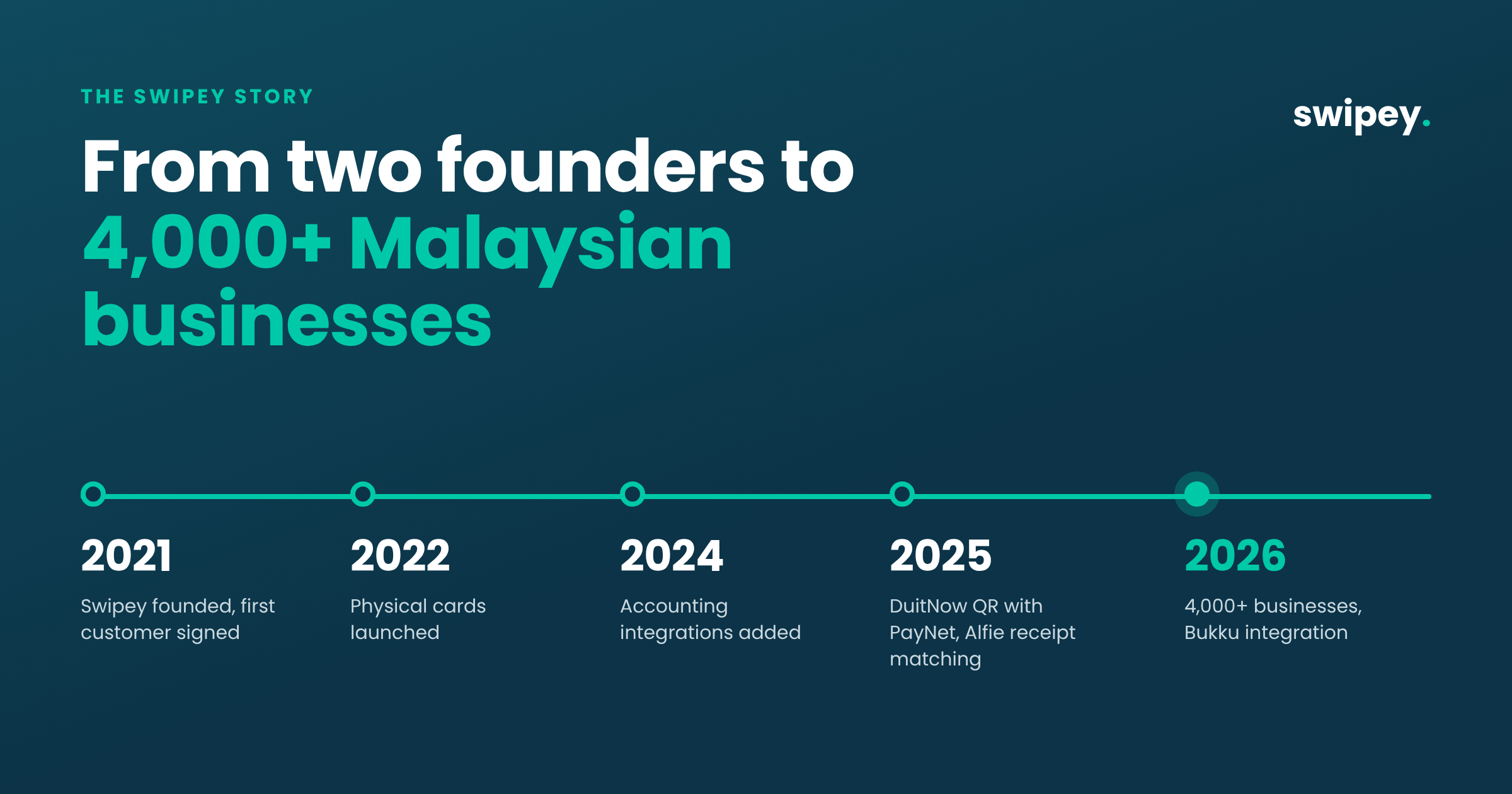
A Virtual Card - QR Enabled for every staff member, a budget on each, receipts matched as they spend. Trusted by 4,000+ Malaysian businesses.